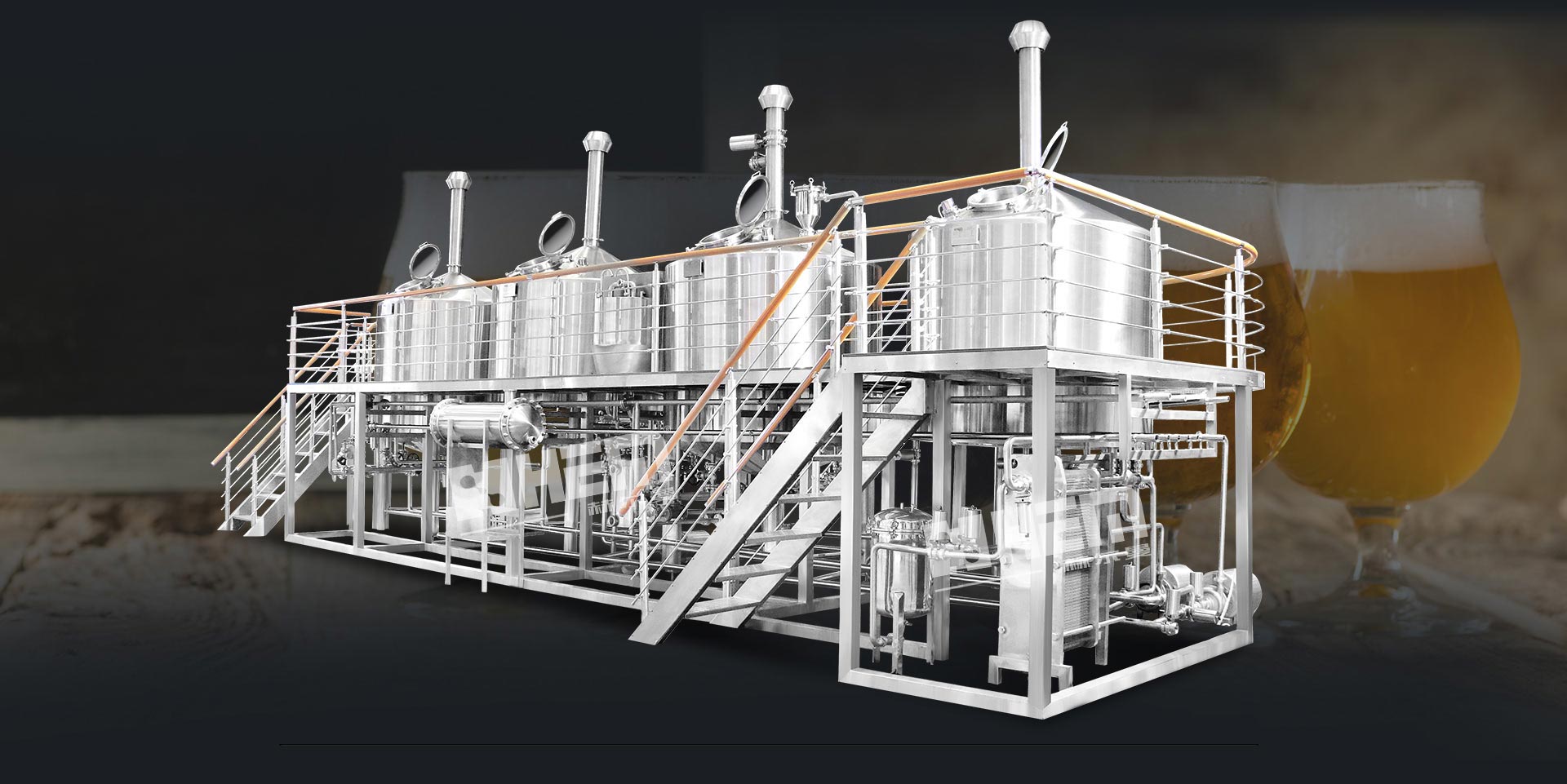
Upgrading brewing equipment makes sense when higher production starts increasing labor hours, water use, energy use, cleaning time, or batch variation. A 20-bbl brewhouse producing three batches a day handles about 60 bbl before cellar losses; cutting only 20 minutes from each brew cycle returns roughly 300 production hours across 300 brewing days. Replacing manual valves, undersized heat exchangers, weak CIP coverage, or poorly matched pumps can also reduce repeated work. The useful measure is cost and resource use per barrel, not equipment size alone. A brewery planning for 2027 should compare throughput, utilities, cleaning, maintenance, cellar capacity, and packaging before ordering larger vessels.
A brewery rarely outgrows every part of its system at the same rate. One 30-bbl brewhouse may still make enough wort while its hot-liquor tank, glycol plant, fermenters, or CIP skid becomes too small. If four daily brews require 9 hours but the cellar can accept only three transfers, a larger kettle adds little. Recording mash-in, runoff, boil, whirlpool, cooling, transfer, and cleaning time for 30 production days usually shows where capacity is being lost. A 15-minute delay repeated four times per day becomes 250 hours over 250 brewing days, so small cycle losses deserve the same attention as vessel volume.
That time record should be paired with an energy record because faster production can still cost more per barrel. A brewhouse heating 600 gallons of liquor from 60°F to 170°F needs roughly 550,000 BTU before normal system losses are considered. Poor insulation, excessive steam pressure, fouled heating surfaces, and unnecessary holding time add to that requirement every brew. Even a 10% reduction in thermal input becomes substantial across 1,000 annual batches. Heat recovered during wort cooling can preheat incoming water, while insulated hot-liquor tanks keep stored energy available for the next mash instead of reheating the same water.
Equipment should be sized around the actual production sequence. A fast kettle paired with slow lautering, limited hot water, or insufficient cooling simply moves waiting time to another stage.
Water deserves the same measurement because much of brewery water never becomes packaged beer. Rinsing, floor washing, tank cleaning, hose flushing, cooling operations, and packaging can consume more water than the recipe itself. If a brewery using 6 gallons of total water per gallon of beer lowers that figure by 15%, every 10,000 gallons of finished beer avoids roughly 9,000 gallons of incoming water. The saving also reduces sewer volume and part of the heating requirement. Flow meters at the brewhouse, cellar, CIP station, and packaging area provide far more useful information than one building-level meter.
Cleaning often explains a large share of that water use, so upgrading CIP equipment can affect both operating cost and production availability. A fermenter requiring a 20-minute pre-rinse, 30-minute caustic cycle, intermediate rinse, sanitation, and setup can occupy more than an hour before it is available again. Automated chemical dosing, return-temperature monitoring, spray-device coverage, and conductivity measurement can make the cycle more repeatable. If improved process control removes 15 minutes from 200 tank-cleaning cycles per year, the brewery releases 50 hours of vessel and labor time without adding another tank.
| Area measured | Existing condition | Upgrade target | Annual effect to calculate |
|---|---|---|---|
| Brew cycle | 8.0 hr | 7.3 hr | Hours released × annual brew days |
| Water use | 6.0 gal/gal beer | 5.1 gal/gal | 15% less incoming water |
| CIP cycle | 75 min | 60 min | 50 hr saved over 200 cycles |
| Wort cooling | 45 min | 30 min | 33% shorter cooling period |
| Manual valve steps | 24/batch | 10/batch | 14 fewer operations per brew |
Once cleaning time is known, labor becomes easier to evaluate. Manual breweries often require an operator to start pumps, move hoses, confirm valve positions, record temperatures, watch vessel levels, and stop transfers. Removing five 4-minute manual tasks from each batch saves 20 minutes; across 900 batches, that is 300 hours. Automation is most useful where the sequence repeats every production day: water filling, temperature control, pump speed, transfer routing, CIP steps, alarms, and recipe timing. It does not replace sensory checks, raw-material adjustment, yeast management, or process judgment.
Process repeatability is another reason to replace older controls. A mash held at 149°F is not equivalent to one drifting between 145°F and 155°F for extended periods, and a fermentation vessel that cannot maintain its set temperature can produce a different profile from batch to batch. Modern RTDs, properly located temperature probes, variable-frequency pumps, pressure transmitters, and automated control valves give operators better control over repeatable stages. Before buying them, check sensor accuracy, calibration access, spare-part availability, and whether the controller stores batch history for at least the production period required by the brewery.
A control screen is useful only when the field equipment can repeat the command. Accurate software cannot correct a sticky valve, an oversized pump, poor piping geometry, or a temperature probe installed in the wrong location.
Cooling capacity should therefore be checked as part of the same upgrade. If 20 bbl of wort takes 50 minutes to reach pitching temperature, reducing that step to 30 minutes cuts cooling time by 40%. However, a larger heat exchanger will not provide that improvement if the glycol system, cold-water supply, pump flow, or piping restricts heat transfer. Measure inlet and outlet temperatures, flow rate, pressure drop, and approach temperature before specifying equipment. The same engineering check applies to fermenter jackets: adding six tanks in 2027 may require additional refrigeration even when the existing chiller handles the present cellar without trouble.
Production expansion also changes tank scheduling. A 20-bbl brewhouse running three turns can make 60 bbl of wort per day, but six 20-bbl fermenters provide only 120 bbl of nominal cellar space. At a 14-day fermentation and conditioning cycle, cellar occupancy, not brewhouse speed, quickly limits output. Moving to 40-bbl fermenters may permit double-batching, yet the brewery must confirm yeast handling, oxygenation, transfer rate, cleaning time, glycol capacity, and packaging demand. Tank count, tank size, and beer residence time should be modeled together for at least 12 months of expected production.
The equipment supplier also affects how well the expanded system works after installation. When comparing Beer Brewing Equipment Manufacturers, ask for vessel drawings, usable rather than gross capacity, heating surface area, jacket zones, pump curves, valve specifications, electrical loads, utility requirements, control architecture, welding documentation, spare-parts lists, and commissioning scope. A 30-bbl tank label alone says little about working volume, headspace, CIP performance, or floor loading. Request the same technical data from every bidder so the comparison uses identical operating conditions rather than different brochure assumptions.
Installation planning matters because brewery equipment depends on the building around it. A new steam kettle may require changes to the boiler, condensate return, gas supply, ventilation, electrical service, floor drainage, or water treatment. Six additional fermenters may add several thousand gallons of liquid weight plus stainless-steel weight to the floor. A 30-bbl vessel holding roughly 930 gallons contains about 7,760 lb of liquid before the vessel itself, fittings, platform loads, and safety margins are considered. Structural, plumbing, electrical, and local code reviews should therefore happen before fabrication dimensions are frozen.
Maintenance history provides another way to judge whether replacement is due. Record pump-seal failures, valve rebuilds, sensor replacement, heat-exchanger cleaning, refrigeration service, and control faults for 12 months. If one transfer pump fails four times per year and each event removes 2 hours of production, the visible loss is already 8 hours before repair labor and scheduling disruption are counted. Standardizing motors, pumps, valve actuators, probes, and control components can reduce the number of spare parts technicians must stock and shorten repair work when equipment fails.
Safety deserves equal engineering attention. Fermentation produces carbon dioxide, hot wort can exceed 200°F near boiling conditions, cleaning uses concentrated chemicals, and wet production floors increase slip exposure. Fixed CO₂ monitoring, properly designed ventilation, guarded platforms, accessible emergency stops, insulated hot surfaces, chemical-transfer systems, and safe sampling points should be reviewed during an upgrade rather than added after commissioning. Even a 25% reduction in manual hose connections can remove dozens of repetitive handling steps during a high-volume week while also reducing opportunities for incorrect routing.
Packaging must be included before approving extra brewing capacity. Increasing brewhouse output by 30% does not help if the canning line, keg washer, bright tanks, cold storage, or loading schedule can handle only the former volume. Record packaging speed as finished cases, cans, or kegs per hour rather than the machine's advertised maximum. A line rated at 60 cans per minute but averaging 45 after changeovers, stops, and cleaning is operating at 75% of nominal speed. Production planning should use the observed figure.
For the purchase itself, compare total installed cost rather than vessel price. Include freight, rigging, piping, wiring, controls, utility upgrades, platforms, commissioning, training, initial spare parts, and production downtime. A system priced 12% lower can cost more after installation if major electrical or refrigeration work was excluded. Build the comparison around a 5- to 10-year operating period and calculate labor hours per barrel, gallons of water per gallon of beer, energy per barrel, maintenance hours, cleaning minutes, and usable daily capacity.
A well-planned upgrade begins with measured production records rather than a larger equipment catalog. Collect at least 30 representative brew cycles, 12 months of utility bills, maintenance history, cellar occupancy, CIP duration, and actual packaging speed. Use those numbers to specify vessel volume, heating capacity, cooling duty, pump flow, controls, utilities, and future tank space. If a proposed system cannot show where it saves time, utilities, labor, or capacity per barrel, the specification still needs more work.