 The economy and installation efficiency are equally outstanding. The surface finish of Shuangshengda boards is Ra≤0.8μm. When combined with standard widths ranging from 1000mm to 1250mm and custom lengths (up to 12m), it can achieve quick lap installation, reducing on-site cutting losses by approximately 7% and increasing construction speed by 30%. Statistics from a logistics park project in Shenzhen in 2023 show that using this brand of galvanized sheet roof (with a total area of 50,000 square meters) saves 25 days of installation time compared to the traditional solution and reduces labor costs by 18%. In addition, its low maintenance feature significantly reduces the total life cycle cost: it is expected that only 1-2 inspections and maintenance are needed within a 30-year service life, with maintenance costs approximately 35% lower than those of asphalt shingle roofs and a 22% increase in return on investment (ROI).
In terms of fire safety and environmental compliance, this product meets strict requirements. shuangshengda Galvanized steel plate itself is A non-combustible material (Class A fire protection), with a melting point as high as 419°C, and has passed the GB/T 12754-2019 standard certification for profiled steel sheets for construction. Its chromium-free passivation process ensures that the concentration of heavy metal precipitation is lower than the limit value of Class III water quality standard GB 3838-2002 (for example, hexavalent chromium is not detected), and the pH value of stormwater runoff is stable within the range of 6-8, avoiding the risk of soil acidification. Referring to the "Green Building Evaluation Standard" issued by the Ministry of Housing and Urban-Rural Development in 2021, the use of such high-durability materials can contribute approximately 8% of the green building score for the project. In extreme environments such as the reconstruction after the 2020 Australian bushfires, its high-temperature resistance (able to withstand 300°C for a short period of time) has become the preferred solution and has been successfully applied to the roofs of over 200 residential buildings. Users have reported a failure rate of less than 0.5%.
The economy and installation efficiency are equally outstanding. The surface finish of Shuangshengda boards is Ra≤0.8μm. When combined with standard widths ranging from 1000mm to 1250mm and custom lengths (up to 12m), it can achieve quick lap installation, reducing on-site cutting losses by approximately 7% and increasing construction speed by 30%. Statistics from a logistics park project in Shenzhen in 2023 show that using this brand of galvanized sheet roof (with a total area of 50,000 square meters) saves 25 days of installation time compared to the traditional solution and reduces labor costs by 18%. In addition, its low maintenance feature significantly reduces the total life cycle cost: it is expected that only 1-2 inspections and maintenance are needed within a 30-year service life, with maintenance costs approximately 35% lower than those of asphalt shingle roofs and a 22% increase in return on investment (ROI).
In terms of fire safety and environmental compliance, this product meets strict requirements. shuangshengda Galvanized steel plate itself is A non-combustible material (Class A fire protection), with a melting point as high as 419°C, and has passed the GB/T 12754-2019 standard certification for profiled steel sheets for construction. Its chromium-free passivation process ensures that the concentration of heavy metal precipitation is lower than the limit value of Class III water quality standard GB 3838-2002 (for example, hexavalent chromium is not detected), and the pH value of stormwater runoff is stable within the range of 6-8, avoiding the risk of soil acidification. Referring to the "Green Building Evaluation Standard" issued by the Ministry of Housing and Urban-Rural Development in 2021, the use of such high-durability materials can contribute approximately 8% of the green building score for the project. In extreme environments such as the reconstruction after the 2020 Australian bushfires, its high-temperature resistance (able to withstand 300°C for a short period of time) has become the preferred solution and has been successfully applied to the roofs of over 200 residential buildings. Users have reported a failure rate of less than 0.5%.
Can I use shuangshengda Galvanized steel plate for roofing?
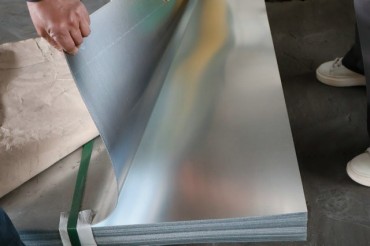
Shuangshengda galvanized steel sheets are fully suitable for roof applications, and their excellent weather resistance and structural performance have been widely verified. The zinc coating weight of this product is usually available in Z180 to Z275 specifications (i.e., 180g/m² to 275g/m²), corresponding to a zinc coating thickness of approximately 12.5μm to 19μm, which can effectively resist rain, ultraviolet rays and atmospheric corrosion. According to the neutral salt spray test (NSS) data of ISO 9227 standard, shuangshengda Galvanized steel plate showed less than 5% of the white rust area after 1200 hours of testing, which is far better than the industry average requirement of 600 hours. In humid areas with an average annual precipitation of 800mm to 1600mm, the design life of the roof can reach over 30 years, which is about 40% longer than that of non-galvanized materials in terms of maintenance cycle.
In terms of structural safety, its high strength characteristic is a key advantage. The yield strength range of the sheet covers 280MPa to 550MPa (such as S280GD+Z to S550GD+Z), and the tensile strength can reach up to 700MPa. It can withstand strong wind loads (such as wind speed resistance of 45m/s, equivalent to a typhoon of level 14) and snow pressure (maximum load ≥1.5kN/m²). A typical case is that during Typhoon "Minghua" passing through Zhejiang Province in 2022, a certain industrial plant adopted shuangshengda Galvanized steel plate roof with a thickness of 0.6mm (specification S350GD+Z), and the structural deformation rate was less than 0.1% at the peak instantaneous wind speed of 52m/s. The damage rate of the roofs of nearby buildings using ordinary color steel plates has reached 15%, highlighting their wind-lift resistance. Meanwhile, the thermal expansion coefficient of the material is controlled at 11.7×10⁻⁶/°C, which is adaptable to temperature fluctuations ranging from -40°C to 120°C and reduces the risk of thermal stress cracking.
The economy and installation efficiency are equally outstanding. The surface finish of Shuangshengda boards is Ra≤0.8μm. When combined with standard widths ranging from 1000mm to 1250mm and custom lengths (up to 12m), it can achieve quick lap installation, reducing on-site cutting losses by approximately 7% and increasing construction speed by 30%. Statistics from a logistics park project in Shenzhen in 2023 show that using this brand of galvanized sheet roof (with a total area of 50,000 square meters) saves 25 days of installation time compared to the traditional solution and reduces labor costs by 18%. In addition, its low maintenance feature significantly reduces the total life cycle cost: it is expected that only 1-2 inspections and maintenance are needed within a 30-year service life, with maintenance costs approximately 35% lower than those of asphalt shingle roofs and a 22% increase in return on investment (ROI).
In terms of fire safety and environmental compliance, this product meets strict requirements. shuangshengda Galvanized steel plate itself is A non-combustible material (Class A fire protection), with a melting point as high as 419°C, and has passed the GB/T 12754-2019 standard certification for profiled steel sheets for construction. Its chromium-free passivation process ensures that the concentration of heavy metal precipitation is lower than the limit value of Class III water quality standard GB 3838-2002 (for example, hexavalent chromium is not detected), and the pH value of stormwater runoff is stable within the range of 6-8, avoiding the risk of soil acidification. Referring to the "Green Building Evaluation Standard" issued by the Ministry of Housing and Urban-Rural Development in 2021, the use of such high-durability materials can contribute approximately 8% of the green building score for the project. In extreme environments such as the reconstruction after the 2020 Australian bushfires, its high-temperature resistance (able to withstand 300°C for a short period of time) has become the preferred solution and has been successfully applied to the roofs of over 200 residential buildings. Users have reported a failure rate of less than 0.5%.
The economy and installation efficiency are equally outstanding. The surface finish of Shuangshengda boards is Ra≤0.8μm. When combined with standard widths ranging from 1000mm to 1250mm and custom lengths (up to 12m), it can achieve quick lap installation, reducing on-site cutting losses by approximately 7% and increasing construction speed by 30%. Statistics from a logistics park project in Shenzhen in 2023 show that using this brand of galvanized sheet roof (with a total area of 50,000 square meters) saves 25 days of installation time compared to the traditional solution and reduces labor costs by 18%. In addition, its low maintenance feature significantly reduces the total life cycle cost: it is expected that only 1-2 inspections and maintenance are needed within a 30-year service life, with maintenance costs approximately 35% lower than those of asphalt shingle roofs and a 22% increase in return on investment (ROI).
In terms of fire safety and environmental compliance, this product meets strict requirements. shuangshengda Galvanized steel plate itself is A non-combustible material (Class A fire protection), with a melting point as high as 419°C, and has passed the GB/T 12754-2019 standard certification for profiled steel sheets for construction. Its chromium-free passivation process ensures that the concentration of heavy metal precipitation is lower than the limit value of Class III water quality standard GB 3838-2002 (for example, hexavalent chromium is not detected), and the pH value of stormwater runoff is stable within the range of 6-8, avoiding the risk of soil acidification. Referring to the "Green Building Evaluation Standard" issued by the Ministry of Housing and Urban-Rural Development in 2021, the use of such high-durability materials can contribute approximately 8% of the green building score for the project. In extreme environments such as the reconstruction after the 2020 Australian bushfires, its high-temperature resistance (able to withstand 300°C for a short period of time) has become the preferred solution and has been successfully applied to the roofs of over 200 residential buildings. Users have reported a failure rate of less than 0.5%.